Bad Guys...
And how We, the People cut them down to size

I’m a 65-year old widow and grandmother who is not about to duke it out over politics; but in these times of trouble, how I wish I was an action hero who could fly in a single bound to Washington D.C. and kick the asses of the bad guys trying to take over my hometown.

I grew up in a family like the ones that Elon and the Muskrats will destroy as they bully government workers to leave their posts. My parents were public servants who worked for government agencies, non-profits and universities throughout their careers. They were smart, caring and deeply ethical people who served others throughout their lives. Their work was never wasteful but broadly and positively impactful to many Americans.
Six foot six inches tall, my dad was no pushover; but he would have chosen to use his words, rather than his fists in the current battle. This is because he was an economist with deep expertise in the money and banking system. His job was researching how and why money matters. Over his career he worked for the Federal Reserve Bank of New York, Lehigh University, US Senate Banking Committee, US Chamber of Commerce, University of Virginia and American University. He spent a lot of time with bankers and businessmen; and while he admired their risk-taking, he was critical of the “winner-take- all” attitudes of die-hard capitalists.
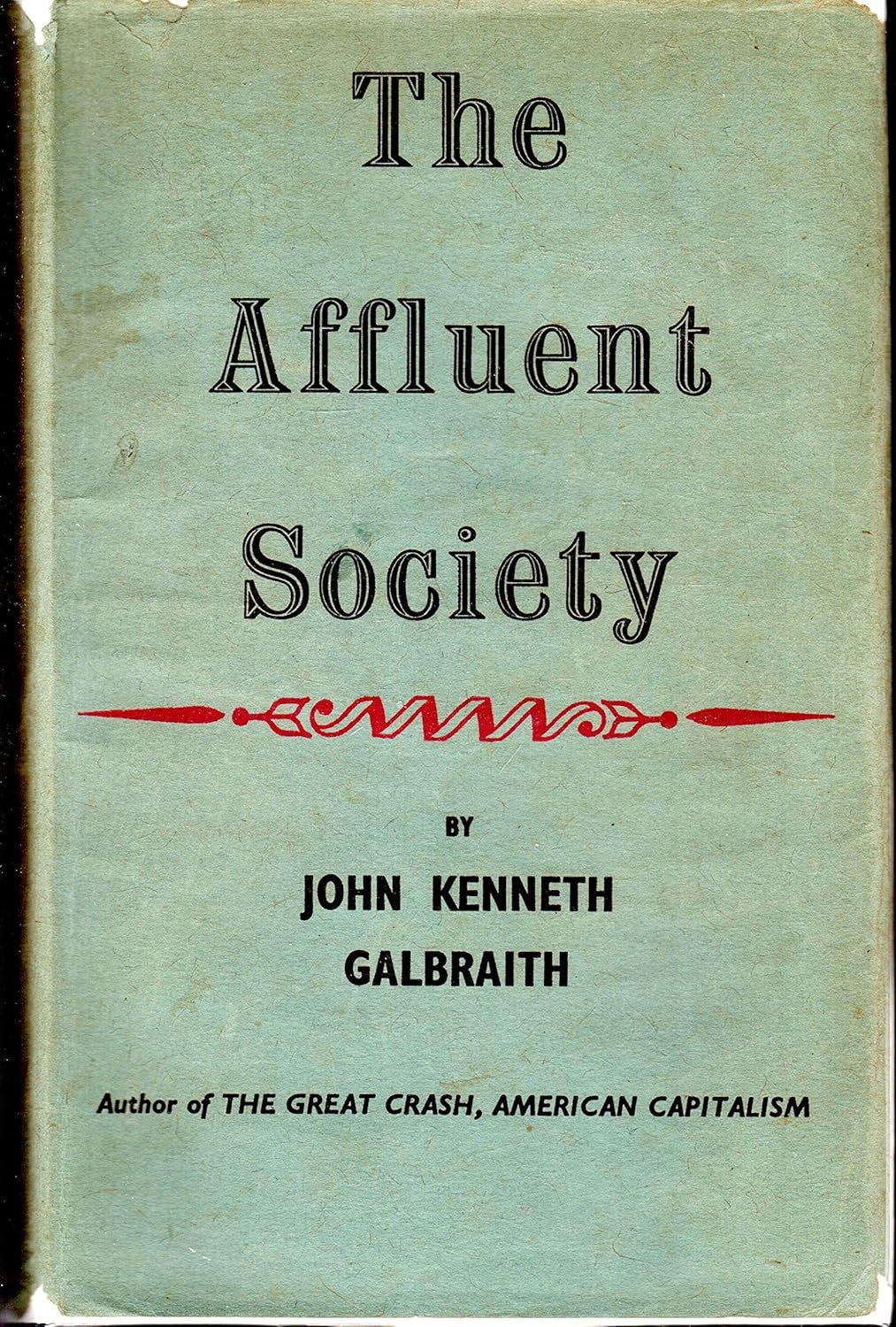
My father was influenced by the economic theories of John Kenneth Galbraith, advisor to American presidents from Franklin D. Roosevelt to Lyndon Johnson. Galbraith was the author of “The Affluent Society”, a seminal work published in 1958 that criticized private consumption over public good. That book inspired the Great Society movement, which resulted in government policy and laws, as well as a web of related government agencies and non-profit institutions, that We, the People have depended on for generations. Remember child labor? The Triangle Waistcoat Fire? Bread lines? Segregated workplaces and schools? The public benefit system protects all Americans from the abuses our ancestors faced before the Great Depression.
My father, Carl Madden, advocated for an economic system that protected the less fortunate, in large part due to his experiences growing up the rural South. Carl was born in 1920 in Pickens, South Carolina to a 21-year-old Russel Mae Morrisette, whose new husband John Thomas Madden, a 31-year old Army captain, hung himself in a barn only three months after his only son was born. If this were not tragic enough, in a Southern Gothic twist-of-fate, Russel Mae was blamed for her husband’s suicide by her mother-in-law. In grief and shame she fled Pickens with baby Carl heading by train to Baltimore, where her sister lived, but where Russel Mae found no reliable work or childcare.
Shortly thereafter, she and baby Carl returned home to Danville, Virginia; a gritty tobacco and mill town along the Dan River where jobs, schools, neighborhoods, businesses and parks were strictly divided by race resulting in shocking economic, educational and health disparities. In the 1920s Danville had a population of 21,539 of whom 50.3% were African American. Back in the 1880’s a bi-racial group formed the Readjuster Party and gained control of City Council. In the days before the 1883 elections Readjuster rule was attacked in fiery public speech by a white supremacist. The next day another white man with a gun attacked several African Americans in the street. A few minutes later 4 African American and 1 White man were dead. A city investigation found the African Americans at fault and the Readjuster Party soon disappeared. For a brief time the “Danville Riot” became as notorious as “The Wreck of the Old 97” that was immortalized in song. Today, Danville is a still a rural, southern town, one struggling to reinvent itself, after its economy cratered during a period of union busting, de-industrialization and farm consolidation driven by corporate interests.
I can’t fathom how any American believes this was a great time in America. Rather, I pray we all recognize how this brutal chain of events and its political and economic consequences eerily presage the current regime’s demonization of federal workers in a bald attempt wrest control of the remaining system of protections that We, the People have. Please note: it was Southern Democrats that stoked Danville’s racial hatred and were responsible for the deaths of those innocent souls.
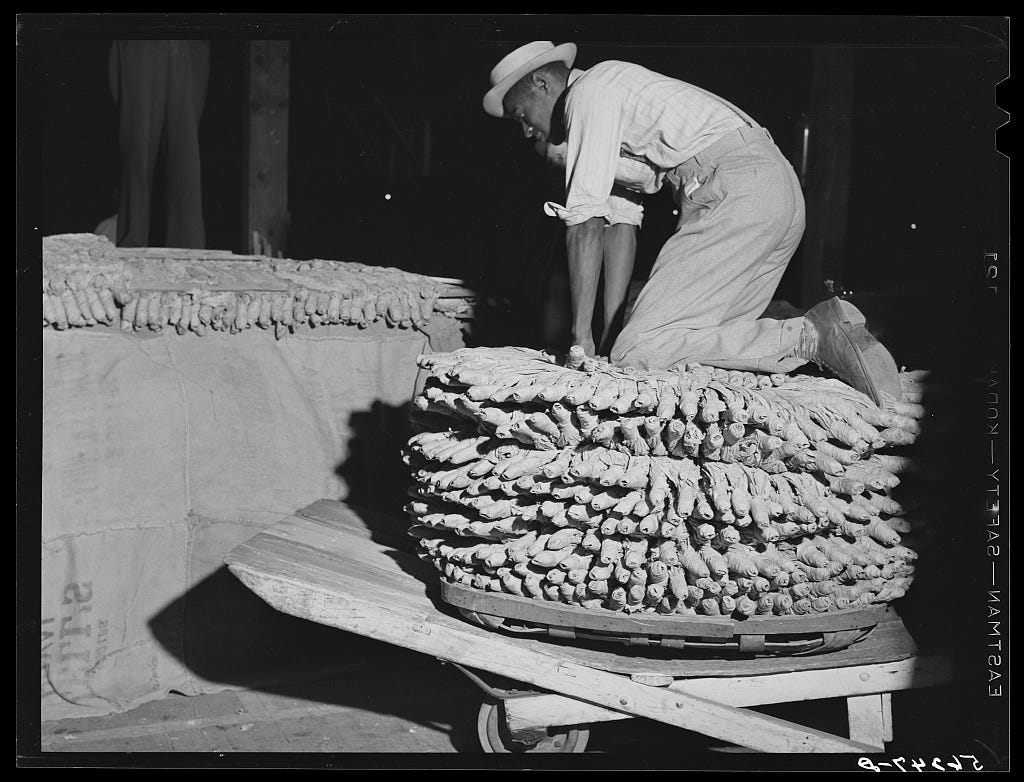
In the deeply unjust town of Danville, Carl and his mother slept together in one bed in a boarding house that Mamie, my great grandmother, started after her alcoholic husband left her destitute. Growing up my dad ate breakfast, lunch and dinner with regional farmers who travelled to Danville to sell their only cash crop, tobacco. He idled at the tobacco markets watching African Americans, ostensibly freed from slavery 60 years earlier, perform the physical labor while white men controlled the auctions and rewards of the bright leaf tobacco market. He watched his mom and grandmother work tirelessly for very little reward and constant trouble with their male guests and bosses. He saw his friends, with whom he played along the railroad tracks behind the boarding house, go to a separate, run-down school because of their skin color. These were the realities of my father’s youth, and it wasn’t until he went to college that he learned to question how and why the world operated that way.
My dad was the first person in his family’s 200-year American lineage to go to college. Carl graduated top of his high school class and was admitted to the University of Virginia. In another Gothic Southern stroke of fate, his tuition was paid for by the two maiden sisters of his dead father, much to his mother’s shock and discomfort. As a senior at U-Va Carl lived on the honors lawn next door to Steve Clarke, a brilliant young man with a persistent stutter, who became his best friend and brother in law, after Steve’s sister Joan and Carl fell in love at first sight. (Note: Steve Clarke was denied his PhD by Harvard University because he could not participate in oral exams due to his stutter. Remember those great days in America?)
Not long after he graduated, Carl became engaged to Joan and he was also appointed an officer in the Coast Guard. Joan went to work with a slide rule at an airplane factory. Dad was assigned to patrol the Aleutian Islands for the next four years and married my mom on a compassionate leave he was granted in 1944. After the war Dad went to graduate school on the GI Bill, living in barracks converted for married students on the campus of U-Va. Over the next five years Dad earned his PhD in economics and my mom earned her Master of Education while bearing and raising three boys in a plywood shack.
There is very strong evidence that my dad and mom’s educational attainment ensured that their children and grandchildren also would go on to college and graduate school. Our extended family’s recent and relative prosperity is the direct result of federal policies like the GI Bill enacted since the Great Depression. Remember that only in the last 50 years have policies and funding addressed the needs of women, people of color, and LGBTQ individuals. How can anyone believe that strip mining the agencies that administer these policies will move our country forward?
In particular, I think about all the women who run organizations today, including myself, and reflect on the generations-long fight for women’s constitutional and human rights. The right to vote. The right to attend university. The right to own property. To leave marriages. To control our fertility. To not be harassed at home, school or work. And most importantly to work for a fair and equal wage. These rights are (or were) backed by federal laws overseen by federal agencies staffed by federal workers that the current regime want to dismantle not through a bi-partisan legislative process but by imperial decree, aka ceaseless Executive Orders. I cannot think of anything more un-American or un-Constitutional.
There are those who believe America’s regulatory environment has run amok, that all that red tape to ensure that those who have the means to start businesses and employ workers protect those who don’t and/or can’t has become a drag on our economy. Along with many of you I lived through deregulation under Reagan and my experience of trickle-down economics was that the rich got richer; the tired, hungry and poor were demonized; and worst of all, the middle class, that my father strived to join, began to disappear. Families lost their farms. Unions were busted. And manufacturing was moved overseas. My father died of a heart attack in 1978, so he didn’t witness his nemesis, Milton Friedman, and his economic theories overtake the nation. If he had been alive, I know he would have used his words to fight back against the “winner take all” mentality Friedman engendered.
Today, I am deeply concerned that Americans once again are destined to become victims of another economic bait and switch under DOGE. The more Americans that support dismantling the federal government, the weaker that We, the People will become. God fearing Americans of all political persuasions delude themselves if they believe that Me, Myself and I should reign supreme. Over the very long arc of history, it’s the most self-interested that are the bad guys (and girls)— regardless of their political party.
Millions of Americans live under incredibly precarious circumstances, just as my great grandmother, grandmother and father lived a hundred years ago. Targeting them. Shaming them. Driving them out. Leaving them without any legal protections. These nefarious acts willfully overlook how so many Americans today came to be educated, safe and prosperous. It wasn’t solely because of our own labor or the free market, it was because the professional staff at federal agencies, non-profits and educational organizations advocated tirelessly to protect, empower and support our dreams. If we destroy this vital sector, inevitably We, the People will lose what we treasure most.
This isn’t what I envisioned writing when I started this Substack on January 1, 2025; but as an American I am discovering that my story is tied not only tied to my family’s history, but to a broader American history. I hope that my writing serves you as you contemplate your own history and your righteous and constitutionally protected rights at this critical moment.